Buy or develop?
Everything has changed
Artificial intelligence is transforming software development. What would have taken months, even years, now delivers in weeks.
From freelancers to institutions, the question keeps coming back: should we find existing software or develop our own? Until last year, the answer was obvious for small structures and agonizing for large ones: development is expensive, in time and money. Internalizing was a luxury that was usually unrealistic. So we went looking for solution vendors, or scoured Google for the right software.
But that was before.
Before: Low code or how to create solutions without breaking the bank
Until March 2025, we turned to tools like FileMaker when the need for a custom solution was justified. This solution made it possible to create powerful and affordable software. In IT jargon, we called these tools "low code": rather than typing thousands of lines of code, we could drag elements onto a canvas and write simplified scripts. What took a week to code was done in a day.
And for the tightest budgets, we found existing software and supported the client through the transition. There was always a solution for everyone, more or less efficient but always offering relief from business frustration.
The tipping point
The tipping point came in the first quarter of 2025 with the birth of AI-powered development assistants. We use Claude Code, created by Anthropic, but the key isn't the tool: it's what it makes possible.
From the first days, we understood that our profession had just changed profoundly. Horse-drawn carriages were still running through the streets, yet on roads still cluttered with technological remnants, a new racing car was arriving.
Within six months, we embraced the new world and understood the fundamental change: all the solutions we couldn't implement due to lack of time and budget were now within reach. We could create software with the same technologies powering Gmail or Facebook, at budgets accessible to our clients.
What it changes concretely
In April 2025, we were adding a complete e-commerce layer to the FileMaker software developed for the Théâtre le Crève-Cœur in Geneva. We had developed more than 75% of the project. The bulk of the work was behind us. But we knew everything had just changed. Continuing with these tools was a fundamental mistake for the long term.
So we started everything from scratch. It's a complex project, fully managing the theater, from reservations to seating, from cash journals to online payments.
We knew it was early for a project of this scale, but too late not to do it.
Today, after some early hiccups, the project is on track and ready for the next ten years. The technical and business documentation is ten times more complete than anything we could do before, ensuring seamless portability. We always make sure our clients can choose to work with other providers without feeling locked in.
Since then, the pace hasn't slowed. We recreated a private social network, quickly convertible to a mobile app. Set up an AI transcription solution compliant with Swiss data protection law. Improved the inventory management system for jewelers. Deployed a CRM with advanced contact and Infomaniak newsletter management for a Geneva association.
Each of these projects would have taken months, even years, not long ago. We delivered them in a few weeks.
And this is just the beginning. We now have more projects underway than at any time in our history. Projects that would never have seen the light of day under the old constraints.
From developer to architect
It may seem childish, but a useful solution is the art of choosing the right Lego bricks. Understanding business needs, putting yourself in the shoes of users and decision-makers, influences all choices. From the helicopter view to the smallest action performed a hundred times a day by employees, it's all the bricks that create the whole.
Proper analysis of stakeholders and processes has always been the most important part of our work. It's becoming the central skill in the new world of development. The architect is now also a conductor: they lead virtual teams and can focus almost entirely on the final result, the user, change management.
This doesn't mean that technical skills have disappeared, far from it. Software building blocks are complex. Security and performance are more important than ever. It's the time spent making choices that has completely changed.
So, buy or develop?
Today, buying only makes sense for very specific needs. You no longer buy software but a reputation, support, long-term security. But even that security is likely to be undermined in the months and years ahead. Why invest a fortune in an ERP when you only use 10% of its features, when it's analysis and planning that will ensure any business runs smoothly?
If adding and removing bricks from a solution designed to truly meet your needs becomes cheaper and faster, why do it any other way? Generic solution vendors will struggle to adapt.
Our advice for today:
Invest in your digital strategy, whatever your size. Don't rush. And if you need to make a change now, think in Lego blocks. It's fun and incredibly effective.
The world of software development has changed. Might as well take advantage of it.
A project to develop? Let's talk.
Let's discuss your digital strategy.
Send us a message
Other news
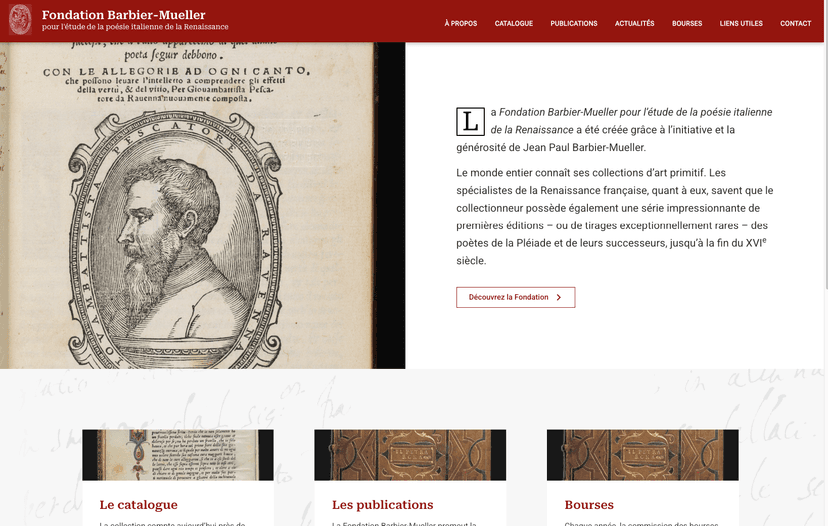
Fondation italienne Barbier-Mueller – Migration and catalog enhancement
SPIP to WordPress migration, catalog improvement and graphic redesign.
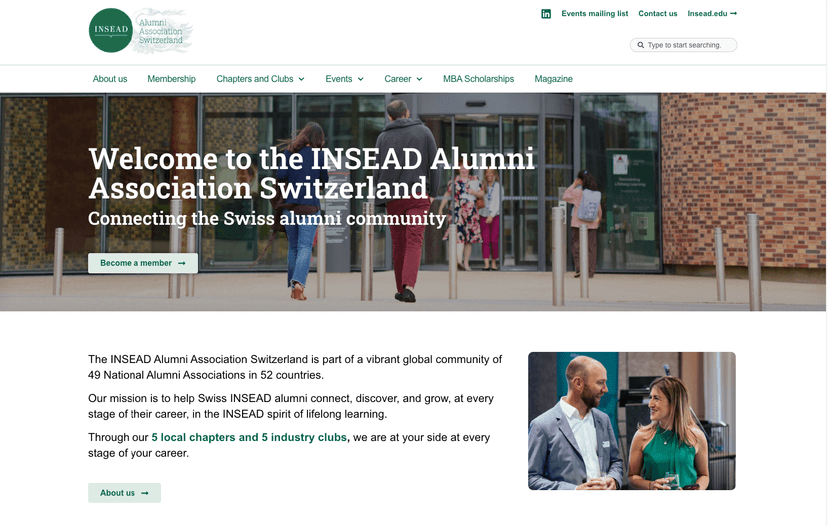
INSEAD Alumni Association – Graphic redesign and event management
Graphic redesign and event management for the INSEAD alumni association.
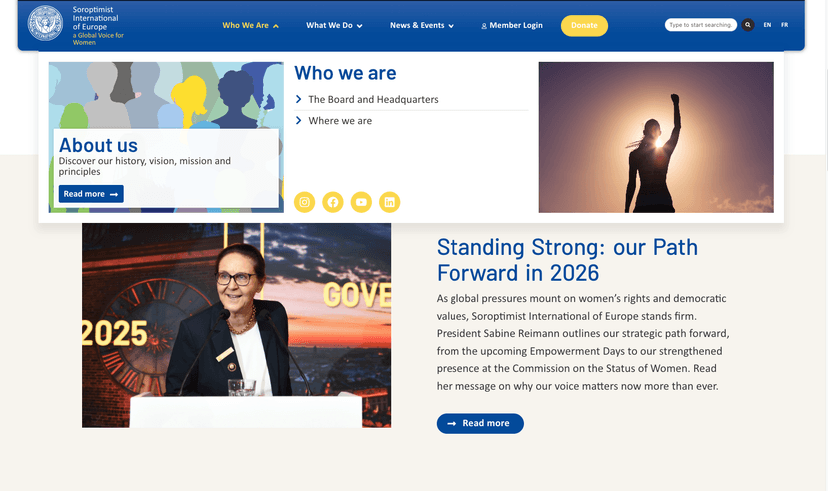
Digital overhaul for Soroptimist International Europe
Content migration, interactive map and automation.
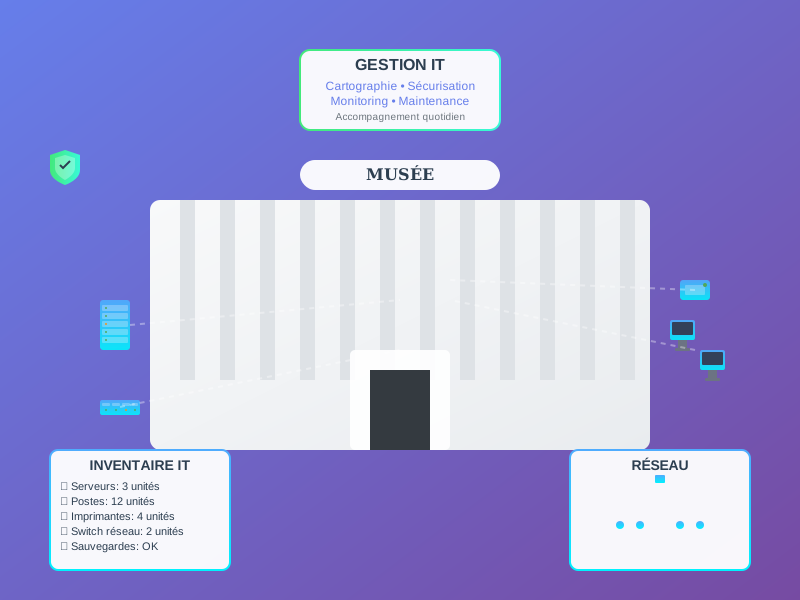
IT infrastructure takeover for an old town museum
Complete support for a regional museum in taking over their IT infrastructure: mapping, securing and optimizing resources.
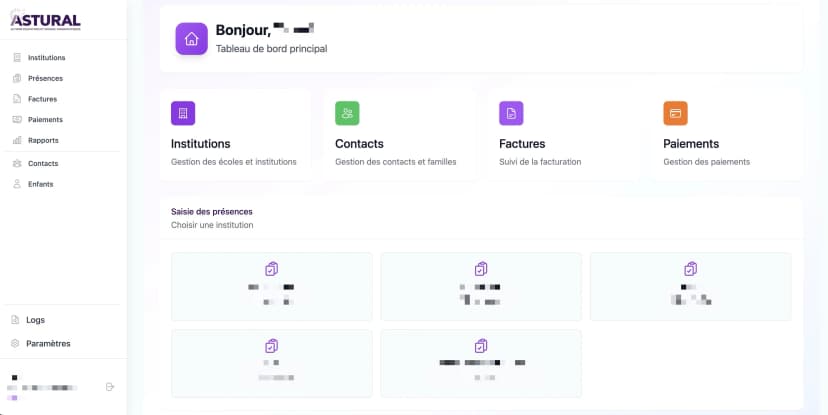
Meal billing system for Astural Foundation
Complete solution for automated meal management and billing for the various establishments of this Geneva foundation.
Microsoft 365 for businesses: The complete guide
Collaboration, security and professional applications for your business.
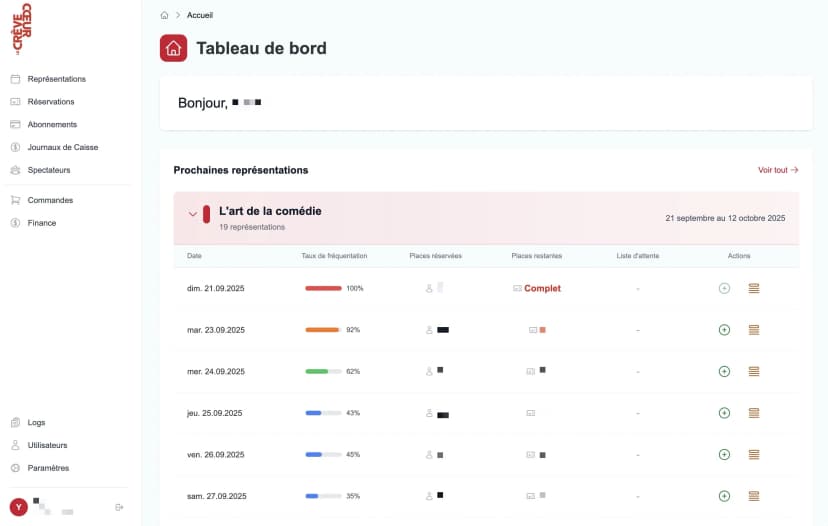
11th digital season for Théâtre le Crève-Cœur
After 10 years with FileMaker, we completely modernized the theater's management system with a complete web solution integrating ticketing, cash register and e-commerce.
Private social network for international association
Private social network hosted in Switzerland, GDPR compliant.
IT Services for associations and NGOs: Our solidarity commitment
IT solutions and preferential rates for associations and foundations.